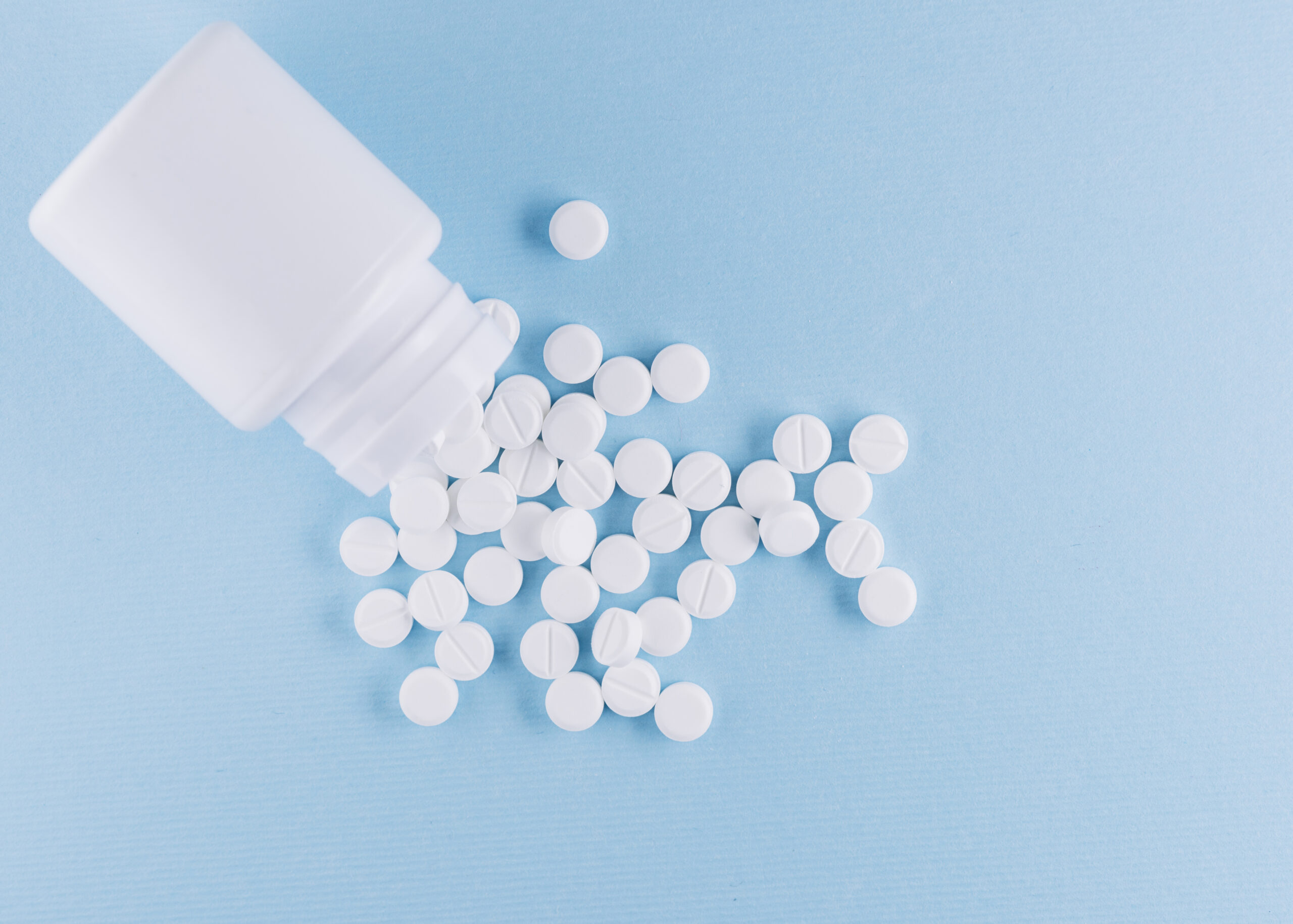
At the beginning of the year, U.S. President Donald Trump became the focus of media attention once again, this time due to concerns regarding his age and health, and consequently his fitness to perform presidential duties. Among other details, Trump’s response to comments about a visible bruise on his hand revealed that he has been taking 325 mg of acetylsalicylic acid daily for many years, compared with the recommended dose of 75–100 mg. Despite medical advice, Trump has expressed skepticism about the effectiveness of lower doses, stating that he “wants nice, thin blood flowing through his heart.”
Mechanism of Action of Acetylsalicylic Acid
Acetylsalicylic acid (ASA, ASK), commonly referred to as aspirin, is a frequent component of household medicine cabinets. At doses of 300 mg or higher, it is used to relieve mild to moderate pain and reduce elevated body temperature. In addition, it is primarily prescribed at doses of 75–100 mg for secondary prevention of cardiovascular events (CVE), such as myocardial infarction. Although it has been on the market for more than 125 years, aspirin remains an active subject of scientific investigation. Beyond its established clinical indications, it has demonstrated potential as an adjunctive therapy in viral infections and in the prevention of gastrointestinal malignancies.
ASA inhibits the activity of the cyclooxygenase (COX) isoenzymes COX-1 and COX-2, which mediate the biosynthesis of prostaglandins and thromboxanes. With respect to its antithrombotic effect, acetylation of COX-1 irreversibly suppresses the synthesis of thromboxane A2, a prostanoid that promotes platelet aggregation, thereby preventing thrombus formation. In addition, ASA exerts supplementary effects, including reduced thrombin generation and enhanced fibrinolysis.
Why Does Trump Use Aspirin?
Based on available information, it is possible that Trump has been taking ASA for approximately 25 years for primary prevention of cardiovascular disease. According to the U.S. Preventive Services Task Force (USPSTF), this indication may be considered in individuals aged 40–70 years with atherosclerotic cardiovascular disease and a low risk of bleeding. However, the use of ASA for primary prevention remains controversial due to the modest benefit observed in at-risk populations and the associated bleeding risk. For individuals older than 75 years (such as Trump), current recommendations advise consideration of discontinuing therapy.
Higher Dose, Greater Efficacy – or Not?
Currently, doses of 75–100 mg are recommended, although in the past—and in Trump’s current regimen—higher doses were once considered acceptable for this indication. Contemporary evidence, however, indicates that increased doses do not confer additional benefit, while cumulative risks increase.
The 325 mg dose reportedly used by the former president approaches levels that may even exert paradoxical effects on platelet aggregation. ASA is substantially more selective for COX-1 than for COX-2. At low doses, it predominantly and irreversibly inhibits COX-1 in platelets, suppressing thromboxane A₂ production. As the dose increases, in addition to the desired platelet effects, ASA in the systemic circulation also inhibits COX-1 and COX-2 in the vascular endothelium and kidneys.
Inhibition of these cyclooxygenases reduces prostaglandin synthesis—endogenous compounds with vasodilatory and antiaggregatory properties. Consequently, prostaglandin E2 and prostacyclin (PGI2) are unable to exert their cardioprotective effects, ironically, increasing the risk of cardiovascular events. That said, the dose in question remains relatively low, and the antiplatelet effect is most likely preserved.
Benefits and Risks
First and foremost, it is likely that President Trump does not have a justified indication for aspirin therapy. If, however, the indication were secondary prevention, treatment would be necessary and lifelong!
Current dosing recommendations of 75–100 mg were established to reduce bleeding risk, while demonstrating efficacy at least equivalent to doses exceeding 150 mg in secondary prevention. Even the lowest daily doses of ASA may cause adverse effects, yet the president reportedly takes a dose four times higher than recommended.
Bleeding is not always limited to harmless bruising. Inappropriate dose escalation increases the risk of gastrointestinal bleeding, which may lead to anemia and angina, as well as intracerebral hemorrhage and stroke.
President Trump does not smoke or consume alcohol; however, apart from playing golf, he is not known to be physically active and frequently consumes salty and fatty foods. Modifications in such lifestyle factors could, in fact, play the most significant role in maintaining cardiovascular health.
Translated by: Nina Mikulić
Literature
2. Trump’s Physical Revealed Serious Heart Concerns, Outside Experts Say, 2018, The New York Times, accessed January 13, 2025.
3. Katzung BG. Basic and Clinical Pharmacology. 14th ed. Zagreb, Medicinska naklada, 2020.
4. U.S. Preventive Services Task Force. Aspirin Use to Prevent Cardiovascular Disease: US Preventive Services Task Force Recommendation Statement. JAMA, 2022, 327(16), 1577–1584.
5. Antithrombotic Trialists’ Collaboration. Collaborative meta-analysis of randomised trials of antiplatelet therapy for prevention of death, myocardial infarction, and stroke in high-risk patients. BMJ, 2002, 324(7329), 71–86. Erratum in: BMJ, 2002, 324(7330), 141.