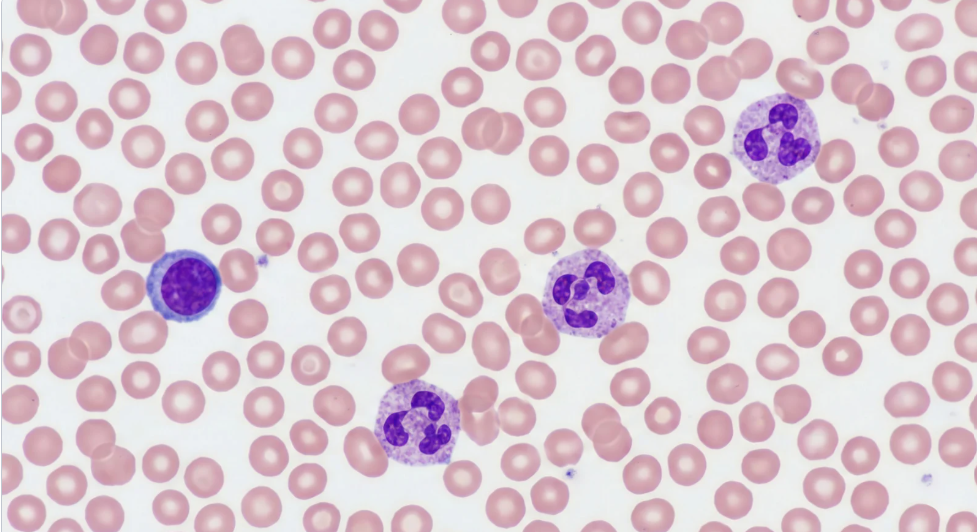
The neutrophil-lymphocyte ratio (NLR) is an example of how laboratory medicine, in recent times, is increasingly striving to find accessible, rapid, and reliable biomarkers that can aid in diagnosis without increasing the cost of diagnostics. The NLR is calculated as the ratio of the absolute number of neutrophils to the absolute number of lymphocytes obtained from a differential blood count. Given the simplicity of its calculation, it is not surprising that numerous studies focus their work on it.
What does NLR actually measure?
Neutrophils and lymphocytes are key players in the immune system, but their roles in the immune response are different. Neutrophils are the primary effectors of nonspecific (innate) immunity, and their numbers increase in acute inflammatory states, infections, and stress. In contrast, lymphocytes are the basis of adaptive immunity, and their reduced numbers are observed in states of chronic inflammation, immunosuppression, or severe systemic stress. In pathological conditions, simultaneous neutrophilia and lymphopenia are often observed, resulting in an elevated NLR. In addition to indicating the presence of inflammation, such a result also shows an imbalance in the immune response, which further indicates its potential prognostic value.
NLR in lab results
What gives NLR an advantage is certainly the fact that it is obtained from a routine complete blood count, without the need for additional laboratory tests, which saves time and resources. This makes it accessible and applicable in everyday clinical practice. However, it is important to emphasize that NLR is not a specific marker for a particular disease and should not be interpreted in isolation. NLR values are influenced by numerous factors such as acute stress, physical exertion, corticosteroid therapy, chronic inflammatory diseases, and malignant and autoimmune disorders. Its diagnostic value is when combined with other laboratory parameters and the patient’s clinical picture.
NLR in practice: updates from scientific studies
Numerous studies confirm the association of elevated NLR with less favorable clinical outcomes. Its role in cardiovascular diseases is highlighted, where elevated NLR is associated with more severe forms of coronary heart disease, a higher risk of acute myocardial infarction, and a worse prognosis. In this case, NLR reflects the intensity of systemic inflammation, which plays a key role in atherosclerosis and plaque destabilization. Furthermore, in the field of oncology, NLR is being investigated as a prognostic marker of survival and response to therapy in a number of solid tumors. It has been observed that elevated NLR values are often associated with shorter survival, which is explained by reduced antitumor immune response and increased proinflammatory activity of neutrophils. Also, during the COVID-19 pandemic, this biomarker, like many others, attracted attention as an early indicator of disease severity. It has been investigated as an early indicator of the severity of the disease, and studies have shown that patients with a more severe clinical picture and a higher risk of mortality often have a significantly elevated NLR.
Old and new markers of inflammation: where is the NLR?
Compared to classical inflammatory markers such as C-reactive protein (CRP) or procalcitonin, NLR has the advantage of rapid availability and low cost. This availability is the main advantage because it indicates an early signal that can trigger and direct further diagnostic work-up. However, it is very non-specific. For this reason, NLR is more often viewed as a complementary marker, rather than a substitute for existing inflammatory parameters. It has a greater role as a supplementary, rather than a replacement, biomarker. The combination of NLR with CRP, D-dimer, or ferritin has proven useful in assessing the severity of the disease and predicting the course of the disease.
The future of a simple biomarker
Although NLR is a simple, readily available, and potentially valuable laboratory parameter, it currently plays a more important role in research than in routine laboratory work. One of the main reasons why NLR is not yet included in routine diagnostic guidelines is the lack of standardized reference values. The thresholds considered clinically significant vary depending on the population and the disease under investigation. Future efforts should focus on standardizing the interpretation of NLR, taking into account the clinical context and other laboratory findings, and on conducting additional studies to integrate it into laboratory and clinical algorithms, which could give it diagnostic and clinical significance.
Translated by: Mirta Maršić
Literature
1. Forget P, Khalifa C, Defour JP, et al. What is the normal value of the neutrophil-to-lymphocyte ratio? BMC Res Notes. 2017;10:12.
2. Imtiaz F, Shafique K, Mirza SS, et al. Neutrophil lymphocyte ratio as a measure of systemic inflammation in prevalent chronic diseases in Asian population. Int Arch Med. 2012;5:2.
3. Lagunas-Rangel FA. Neutrophil-to-lymphocyte ratio and COVID-19 severity: a systematic review and meta-analysis. Int Immunopharmacol. 2020;86:106718.
4. Zahorec R. Ratio of neutrophil to lymphocyte counts—rapid and simple parameter of systemic inflammation and stress in critically ill. Bratisl Lek Listy. 2001;102:5–14.
5. Templeton AJ, McNamara MG, Šeruga B, et al. Prognostic role of neutrophil-to-lymphocyte ratio in solid tumors: a systematic review and meta-analysis. J Natl Cancer Inst. 2014;106:dju124.
6. Liu Y, Du X, Chen J, et al. Neutrophil-to-lymphocyte ratio as an independent risk factor for mortality in hospitalized patients with COVID-19. J Infect. 2020;81:e6–e12.