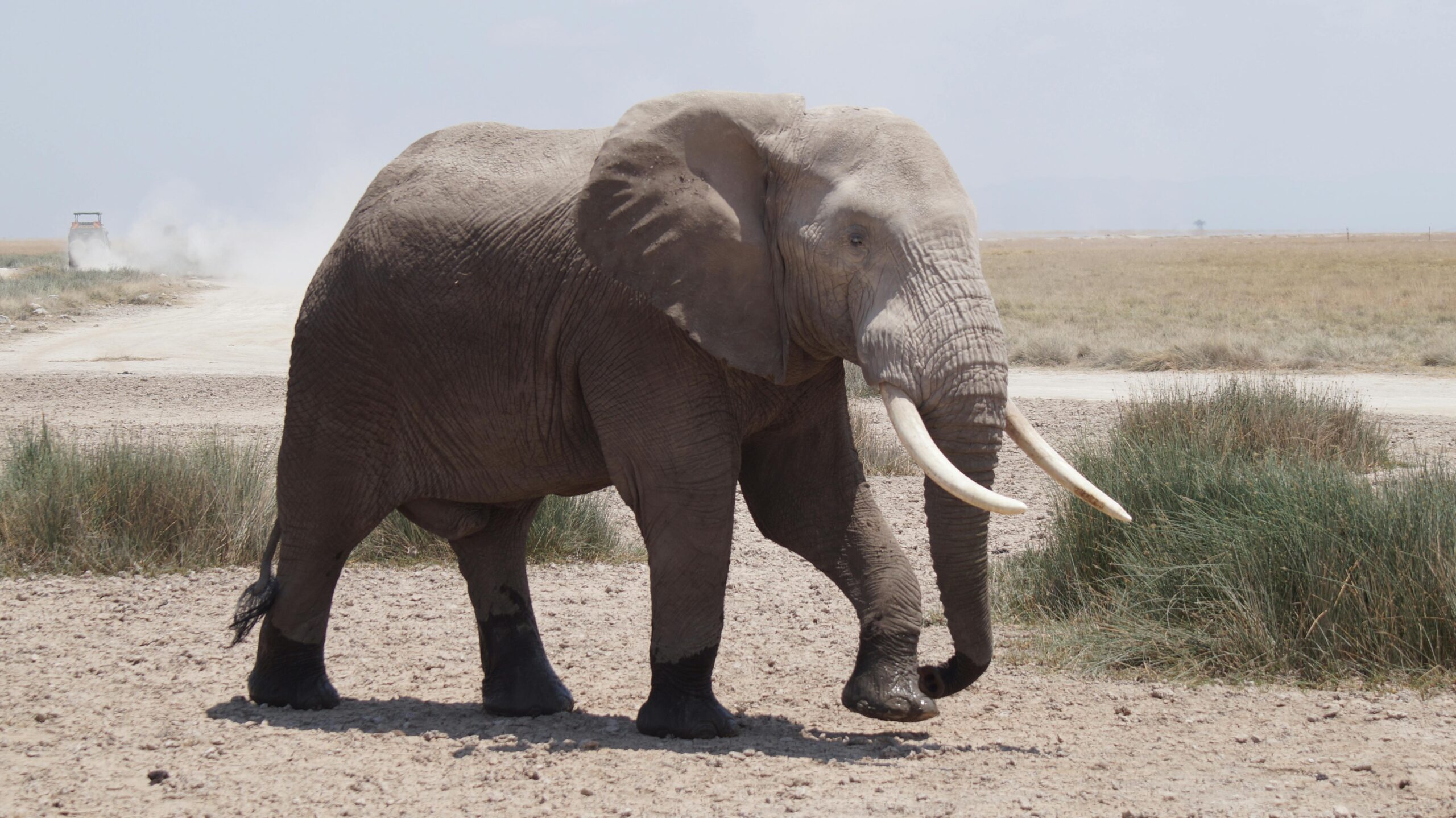
Many scientists are trying to answer questions about the origin and nature of cancer, but some phenomena related to this disease remain counterintuitive. For example, the largest animals on Earth, such as elephants and whales, don’t develop cancer more frequently than humans, despite having significantly more cells and often living longer. How is this possible? What stands behind this phenomenon, and what does it tell us about the nature of cancer itself? These are the questions addressed by Peto’s paradox.
How does cancer develop, and what is Peto’s paradox?
Cancer occurs when the body cells, due to accumulated mutations in their genes, begin to divide and grow uncontrollably. Such cells can damage surrounding tissues, disrupt organ function, and form tumors. As the disease progresses, tumor cells consume the body’s energy and nutrients, gradually weakening and exhausting the body. Since mutations occur partly randomly, it would be logical to expect that organisms with a larger number of cells would have a higher risk of developing cancer. Each cell carries the potential for mutation, so a larger number of cells should increase the likelihood of developing a tumor. However, observations in nature show a different pattern. The largest animals on Earth, such as elephants or whales, do not get cancer significantly more often than humans, even though they have a much larger number of cells and often live longer. This seemingly illogical phenomenon is known as Peto’s paradox, or the lack of the expected association between the size of an organism and the incidence of cancer.
Interestingly, within a species, the opposite trend can be observed. For example, in humans, taller individuals are statistically slightly more likely to develop certain tumors, and the risk of cancer also increases with age. In other words, within the same species, a higher number of cells may be associated with a slightly higher risk of developing cancer. However, when comparing different animal species, the expected increase in cancer incidence with increasing body mass is largely absent.
How does evolution protect large animals from cancer?
One of the most common explanations for Peto’s paradox is based on evolution. According to this hypothesis, large and long-lived animals must have evolved more effective mechanisms to protect against the formation of tumors. As the body grows and the number of cells increases, the organism must develop stronger control systems that prevent uncontrolled cell division. Such mechanisms include more efficient repair of DNA damage, more precise control of the cell cycle, removal of potentially dangerous cells, and activation of programmed cell death (apoptosis). Therefore, it is assumed that large animals have evolved more advanced antitumor systems than smaller species. This idea is supported by numerous studies showing that some large animals possess a greater number of genes involved in the control of cell growth.
Tumor suppressor genes: a natural defense against cancer
One of the most important mechanisms of protection against cancer involves the action of tumor suppressor genes, which encode proteins responsible for controlling cell growth and genome stability. A particularly important example is the TP53 gene, which encodes the p53 protein. This protein is often referred to as the “guardian of the genome” because it plays a crucial role in recognizing and responding to DNA damage. When DNA damage occurs in a cell, p53 can stop the cell cycle and allow repair of the genetic material. If the damage is too big, p53 can initiate the process of apoptosis, or programmed cell death, which prevents the development of a potentially tumor cell.
Interestingly, research has shown that elephants have a significantly higher number of copies of the TP53 gene than humans. While humans have two copies of that gene, elephants have as many as 20 copies, or a total of 40 alleles. Thanks to this, their cells can more efficiently react to DNA damage. Experimental studies have shown that elephant cells, when exposed to radiation or other mutagens, enter apoptosis much faster than human cells. This removes potentially dangerous cells before they can develop into a tumor.
How does Peto’s paradox open possibilities for antitumor therapies?
Peto’s paradox has prompted research into the natural mechanisms by which some species protect themselves from developing cancer. Although large animals have significantly more cells than humans, they have developed effective mechanisms that reduce the risk of developing cancer. Understanding these mechanisms – such as increased copy number of the TP53 gene, more efficient DNA repair systems, and stronger induction of apoptosis – could play an important role in the future development of new therapeutic approaches to treat tumors. Further research into this paradox could help us better understand natural strategies to fight cancer and potentially apply them in therapy.
Translated by: Mirta Maršić
Literature
1. Lynch VJ. Peto’s paradox revisited (revisited, revisited, revisited, and revisited yet again). Proc Natl Acad Sci U S A. 2025 Apr 8;122(14):e2502696122. (Available at: https://pmc.ncbi.nlm.nih.gov/articles/PMC12002202/ Accessed on: 13.03.2026.)
2. Brown JS, Cunningham JJ, Gatenby RA. The multiple facets of Peto’s paradox: a life-history model for the evolution of cancer suppression. Philos Trans R Soc Lond B Biol Sci. 2015 Jul 19;370(1673):20140221. (Available at: https://pmc.ncbi.nlm.nih.gov/articles/PMC4581036/ Accessed on: 13.03.2026.)
3. Perillo M, Silla A, Punzo A, Caliceti C, Kriete A, Sell C, Lorenzini A. Peto’s paradox: Nature has used multiple strategies to keep cancer at bay while evolving long lifespans and large body masses. Biomed J. 2024 Apr;47(2):100654. (Available at: https://pmc.ncbi.nlm.nih.gov/articles/PMC10973980/ Accessed on: 13.03.2026.)
4. Johns Hopkins University. Peto’s paradox: Why big animals rarely get cancer. Johns Hopkins Magazine. 2025. (Available at: https://hub.jhu.edu/magazine/2025/fall/petos-paradox-animals-size-cancer/ Accessed on: 13.03.2026.)
5. The Scientist. Peto’s paradox: How gigantic species evolved to beat cancer. The Scientist Magazine. 2024. (Available at: https://www.the-scientist.com/peto-s-paradox-how-gigantic-species-evolved-to-beat-cancer-72725 Accessed on: 13.03.2026.)
6. The oncological portal. Cancer –informations and educative materials about oncological diseases. (Available at: https://onkoloski-portal.hr/ Accessed on: 13.03.2026.)