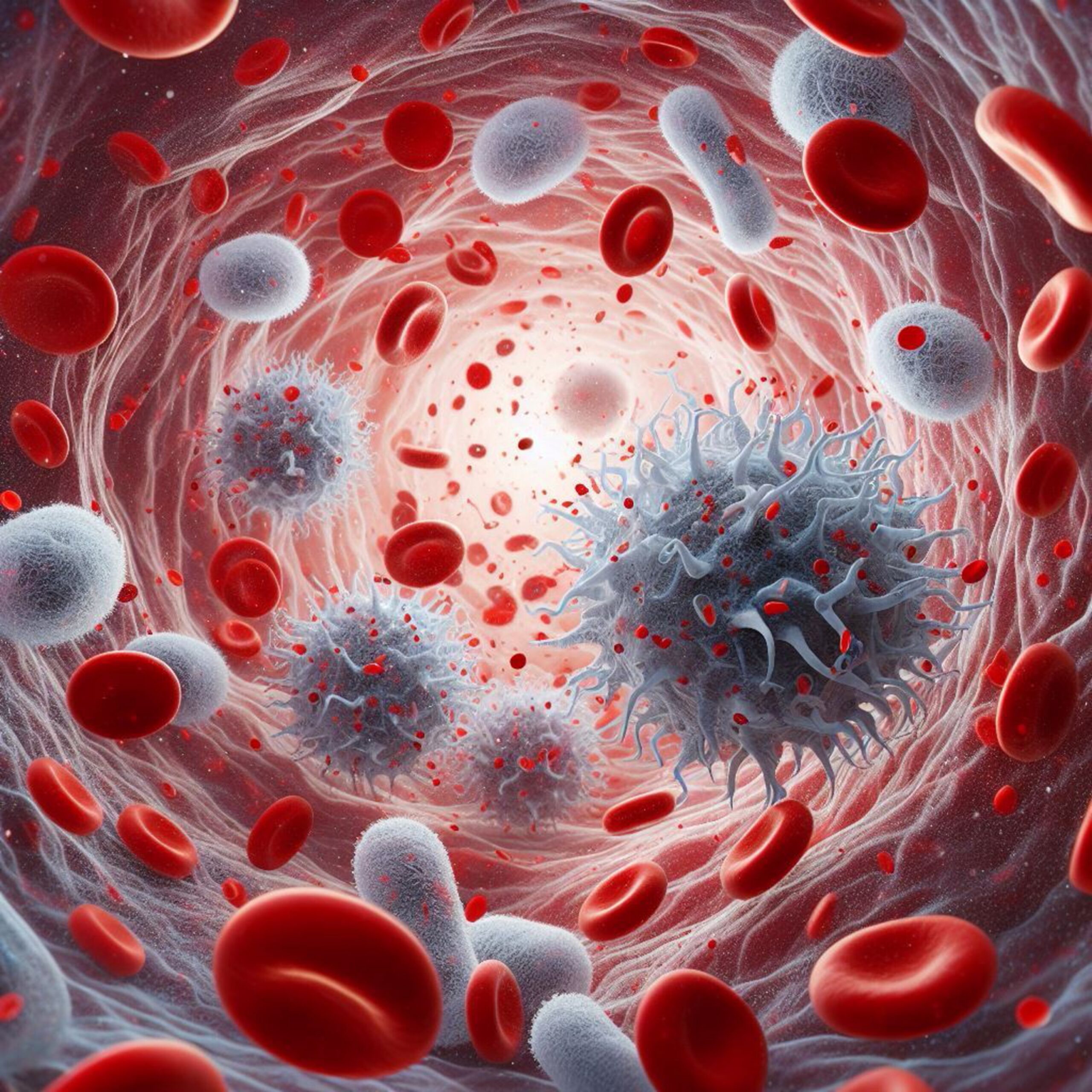
Lipoprotein(a), Lp(a), is one of the most intriguing and at the same time clinically most underestimated molecules in modern cardiology. Despite many studies, it has remained in the shadow of the better-known lipid parameters – total cholesterol, LDL-cholesterol, triglycerides, and HDL-cholesterol. However, today it has been unequivocally confirmed that Lp(a) is an independent risk factor for the development of cardiovascular diseases, equal to classic risk factors such as smoking, diabetes, obesity, and arterial hypertension.
Lp(a) – a silent epidemic
What makes Lp(a) special is the fact that its plasma concentrations are 70–90% genetically determined and stable throughout life. Unlike almost all other known risk factors, Lp(a) is not significantly affected by lifestyle changes, exercise, or diet. This creates a clinical paradox: we know that the patient is at increased risk, but until recently, it was not possible to help him significantly in practice. According to estimates, about 1.5 billion people worldwide have elevated Lp(a) levels, or almost one in five people, which clearly shows how crucial it is to introduce Lp(a) determination into routine clinical practice.
Why is Lp(a) dangerous?
Structurally, Lp(a) is an LDL-like lipoprotein particle. Its core contains cholesterol esters and triglycerides, surrounded by a phospholipid shell in which apolipoprotein B100 (apoB100) is embedded. What makes Lp(a) a unique molecule is the covalent disulfide bond between apoB100 and a specific glycoprotein called apolipoprotein(a). The presence of apo(a) gives the Lp(a) particle three key pathogenic properties that make it particularly harmful to the cardiovascular system: proatherogenicity, proinflammatoryity, and prothromboticity.
Lp(a) accumulates in the blood vessel wall, where it promotes oxidative modification of lipids. Oxidized phospholipids attract monocytes and macrophages, accelerate the formation of foam cells, and promote the progression of atherosclerotic plaque. Lp(a) also inhibits the activity of lipoprotein lipase and interferes with the normal metabolism of HDL, further worsening the lipid profile. The resulting oxidized phospholipids are powerful drivers of inflammation. They activate endothelial cells, promote the expression of adhesion molecules (VCAM-1, ICAM-1) and chemokines (MCP-1), and stimulate the production of pro-inflammatory cytokines (IL-6, TNF- α). In this way, Lp(a) directly contributes to chronic vascular inflammation, which is the basis of atherogenesis. According to some studies, Lp(a) can also activate the complement system, which further enhances the inflammatory response in the vessel wall. Apo(a) is structurally similar to plasminogen, with the result that apo(a) competitively inhibits the binding of plasminogen to fibrin and cell receptors, thereby reducing fibrinolysis and promoting clot formation. Lp(a) also inhibits tissue plasminogen activator (tPA) and induces expression of plasminogen activator inhibitor type 1 (PAI-1). Therefore, high levels of Lp(a) are not only associated with atherosclerosis but also with thrombotic complications such as deep vein thrombosis and pulmonary embolism.
Concerning figures
The role of Lp(a) in the development of cardiovascular disease has been clearly established over the years. Individuals with Lp(a) concentrations above 50 mg/dL have a 35% higher risk of incident CVD events compared with those with levels below 15 mg/dL. In observational studies, patients with Lp(a) ≥30 mg/dL had a threefold increased risk of acute myocardial infarction, regardless of cholesterol levels, smoking status, and body weight. High Lp(a) has been identified, along with low HDL levels and obesity, as one of the most significant independent predictors of acute myocardial infarction. A group of patients undergoing percutaneous coronary intervention (PCI) with a mean Lp(a) of approximately 79 mg/dL had significantly lower survival rates compared with patients with normal Lp(a). In addition to coronary heart disease, elevated Lp(a) also increases the risk of stroke, peripheral arterial disease, thrombosis, and calcifying aortic stenosis.
The first step in risk assessment
Leading international guidelines from the National Lipid Society, the European Atherosclerosis Society, and the Canadian Cardiology Society recommend a single measurement of Lp(a) in all adults to assess cardiovascular risk. Values ≥50 mg/dL (or ≥125 nmol/L) are considered high-risk cutoffs. However, levels above 30 mg/dL may also be clinically significant, especially in the presence of other risk factors. Specific indications for testing include: family or personal history of premature cardiovascular disease, resistance to statin therapy despite adequate dosing, diagnosis of familial hypercholesterolemia, individuals of South Asian or African descent due to higher prevalence, and patients with calcific aortic stenosis without other clear cause.
Years without therapy
Despite the clear clinical significance of elevated Lp(a), therapeutic options have been very limited until recently, and lifestyle changes have not been helpful either. Paradoxically, statins, which are the most widely used lipid-lowering drugs, can even increase Lp(a) levels by up to 20%. Niacin and estrogens, which can lower Lp(a), have also been possible therapies, but their use is not recommended due to their unfavorable safety profile. Namely, niacin increases the risk of stroke, while hormone therapy carries thromboembolic and oncological risks. PCSK9 inhibitors (evolocumab, alirocumab) have been shown to lower Lp(a) by around 20–30%, which is a useful additional effect in patients who are already on this therapy for high LDL. However, this reduction is usually not sufficient in patients with extremely high baseline Lp(a) levels. Lipoprotein apheresis is currently the most effective available method for lowering Lp(a), with the potential to reduce it by up to 70%. However, it is an invasive method that requires repetition every 1–2 weeks and is only available in specialized centers.
A new era: four gene-silencing drugs
In recent years, four new drugs have been advancing in clinical trials that target Lp(a) by gene silencing mechanisms in hepatocytes. These drugs represent the most significant advances in targeted Lp(a) lowering to date. Pelacarsen is a GalNAc-conjugated antisense oligonucleotide that binds to apo(a) mRNA and activates RNase H, which degrades the mRNA, reducing apo(a) synthesis and plasma Lp(a) levels. In phase 2 trials, it achieved an Lp(a) reduction of up to 80% with monthly dosing, and weekly dosing led to levels below 50 mg/dL in 98% of participants. Olpasiran and lepodisiran act by the same mechanism, as GalNAc-conjugated small interfering RNAs (siRNAs) that are incorporated into the RISC complex and catalyze the degradation of apo(a) mRNA. Olpasiran achieved an Lp(a) reduction of up to 100% at higher doses in phase 2, with an effect that was maintained for 12–24 weeks. Lepodisiran stands out with its optimized chemical modification that prolongs the duration of effect, and in phase 2 it achieved a 93.9% reduction with the potential for dosing every 6 months, which would make it the most infrequently dosed drug in this class. Muvalaplin is unique because it works by a different mechanism. It is a small molecule inhibitor that prevents the binding of apo(a) to apoB100, thereby blocking the formation of mature Lp(a) particles. Its key advantage over others is its oral route of administration, which eliminates the need for injections and makes it potentially the most suitable for long-term use in a wider population.
All four of these new therapies have shown a favorable safety profile in trials to date. The only reported side effects for parenteral forms are local reactions at the site of subcutaneous injection (redness, mild edema, transient pain), which are transient and clinically insignificant.
A solution at the doorstep
Lipoprotein(a) is an important, genetically determined cardiovascular risk factor that, despite its high prevalence and clear mechanisms of pathogenicity, has been therapeutically neglected. Its three pathogenic properties, proatherogenicity, proinflammatoryity, and prothromboticity, explain its clinical importance. The biggest problem with Lp(a) to date is knowledge of the risk without the possibility of action. However, recent studies claim that we are on the verge of a solution. If the results of phase 3 trials of pelacarsen, olpasiran, lepodisiran, and muvalapin confirm that the reduction of Lp(a) and the reduction of CVD events are proportional, the treatment of elevated Lp(a) could become possible. In the meantime, all guidelines recommend measuring Lp(a) in all adults. Early identification of patients with high Lp(a) allows for more intensive monitoring of the patient, consideration of adequate therapy and informing the patient about the genetically determined risk that is transmitted to offspring.
Translated by: Mirta Maršić
Literature
Kronenberg F, Mora S, Stroes ESG, Ference BA, Arsenault BJ, Berglund L, et al. Lipoprotein(a) in atherosclerotic cardiovascular disease and aortic stenosis: a European Atherosclerosis Society consensus statement. Eur Heart J. 2022;43(39):3925–3946. doi:10.1093/eurheartj/ehac361
Reyes-Soffer G, Ginsberg HN, Berglund L, Duell PB, Heffron SP, Kamstrup PR, et al. Lipoprotein(a): a genetically determined, causal, and prevalent risk factor for atherosclerotic cardiovascular disease: a scientific statement from the American Heart Association. Arterioscler Thromb Vasc Biol. 2022;42(1):e48–e60. doi:10.1161/ATV.0000000000000147
Kamstrup PR, Tybjaerg-Hansen A, Steffensen R, Nordestgaard BG. Genetically elevated lipoprotein(a) and increased risk of myocardial infarction. JAMA. 2009;301(22):2331–2339. doi:10.1001/jama.2009.801
Koschinsky ML, Bajaj A, Boffa MB, Dixon DL, Ferdinand KC, Gidding SS, et al. A focused update to the 2019 NLA scientific statement on use of lipoprotein(a) in clinical practice. J Clin Lipidol. 2024;18(3):e308–e319. doi:10.1016/j.jacl.2024.03.001
Tsimikas S, Karwatowska-Prokopczuk E, Gouni-Berthold I, Tardif JC, Baum SJ, Steinhagen-Thiessen E, et al.; AKCEA-APO(a)-LRx Study Investigators. Lipoprotein(a) reduction in persons with cardiovascular disease. N Engl J Med. 2020;382(3):244–255. doi:10.1056/NEJMoa1905239
O’Donoghue ML, Rosenson RS, Gencer B, López JAG, Lepor NE, Baum SJ, et al.; OCEAN(a)-DOSE Trial Investigators. Small interfering RNA to reduce lipoprotein(a) in cardiovascular disease. N Engl J Med. 2022;387(20):1855–1864. doi:10.1056/NEJMoa2211023
Nissen SE, Ni W, Shen X, Wang Q, Navar AM, Nicholls SJ, et al.; ALPACA Trial Investigators. Lepodisiran — a long-duration small interfering RNA targeting lipoprotein(a). N Engl J Med. 2025;392(17):1673–1683. doi:10.1056/NEJMoa2415818
Nicholls SJ, Ni W, Rhodes GM, Nissen SE, Navar AM, Michael L, et al. Oral muvalaplin for lowering of lipoprotein(a): a randomized clinical trial (KRAKEN). JAMA. 2025;333(3):222– 231. doi:10.1001/jama.2024.24017