Tranexamic acid is a antifibrinolytic used to treat increased bleeding of various causes. It’s primarily used for heavy periods, bleeding during operations, nosebleeds and dental procedures. Tranexamic acid, a structural analogue of L-lysine, blocks the binding of plasminogen to fibrine, preventing the dissolution of fibrine. However, due to its anti-inflammatory effects and its ability to decrease melanin production, this molecule is finding more and more uses in dermatology and rosacea treatment.
What is rosacea?
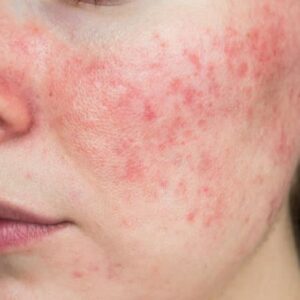
Rosacea is a chronic skin disease that causes redness, visible capillaries and inflamed bumps on the face; most often found on the cheeks, nose, forehead and chin, but it can also affect the eyes. It’s characterised by a tingling, burning feeling, which causes discomfort in day-to-day life. Although the cause isn’t fully clear, it is a combination of genetic and environmental factors. Stressors such as sun exposure, stress, alcohol and spicy food can also cause worsening symptoms. There are four main types of rosacea: erythematotelangiectacic, papulopustular, phymatous and ocular; a fifth variant, granulomatous rosacea, also exists. Current therapeutical approaches include topical and systemic antibiotics, anti-inflammatory drugs, retinoids and laser therapy, but these treatments aren’t completely effective for many patients, which underlines the need for new therapeutical directions.
Tranexamic acid for patients with rosacea?
Although rosacea is common, its pathophysiologic mechanisms still aren’t completely clear, but new pharmacologic approaches are being researched. Rosacea is an inflammatory-vascular skin disease, not a coagulative disorder. Tranexamic acid is used in rosacea therapy in classic forms, such as oral and topical therapy, as well as in modern techniques such as intradermal injections, microneedling and laser treatments. New clinical studies have confirmed its effect on decreasing the symptoms of rosacea by renewing the skin barrier, regulating the immune response and inhibiting angiogenesis.
What is the link between tranexamic acid and rosacea?
Plasminogen binds to fibrin in a blood clot, followed by its activation to plasmin – an enzyme breaking down fibrine in the process of fibrinolysis. Tranexamic acid competes with fibrin to bind to plasminogen, thereby stopping its activation to plasmin and slowing down the breakdown of fibrin. Plasmin and its active forms have been linked to angiogenesis, the formation of new blood vessels. This leads to a more pronounced redness and vascular component of the disease. Furthermore, plasmin can induce inflammatory processes and damage skin barrier integrity, which furthers the inflammation and worsening of rosacea symptoms. By inhibiting plasmin, tranexamic acid stabilises the skin barriers, decreases excessive angiogenesis and calms the inflammatory response, which can all together have a positive effect on the clinical image of rosacea in patients.
A potential cure
Although previous research has shown that tranexamic acid can be safe and effective in curing rosacea, there are certain research gaps in currently available literature. It is necessary to conduct well thought out, randomized, double blind controlled studies with a large number of participants, in order to precisely determine the effects of tranexamic acid, while accounting for factors that can affect results, such as emotional states, environmental changes and other oral or topical therapy. Future research should also focus on testing the efficacy of tranexamic acid for different types of rosacea, given that different disease variations have specific pathophysiologic mechanisms.
Literature
2. Jiawen Zhang, Doduo Gu, Yang Yan, Ruoxin Pan, Hui Zhong, Chengfeng Zhang, Yang Xu: Potential Role of Tranexamic Acid in Rosacea Treatment: conquering Flushing Beyond Melasma,Clin Cosmet Investing Dermatol. 2024 Jun 26